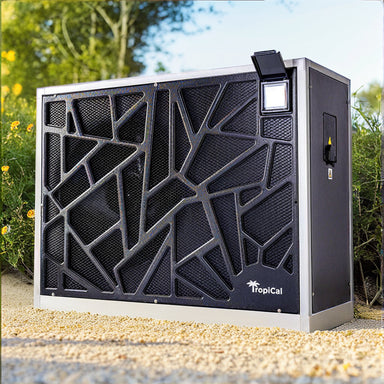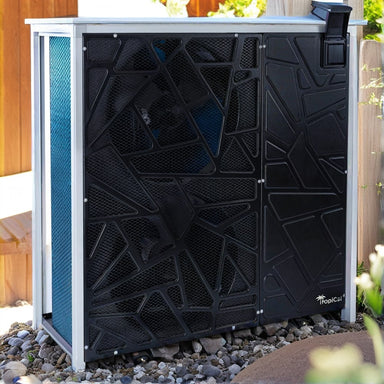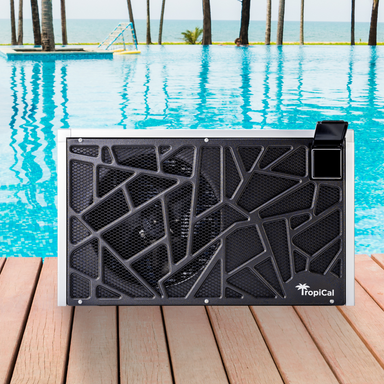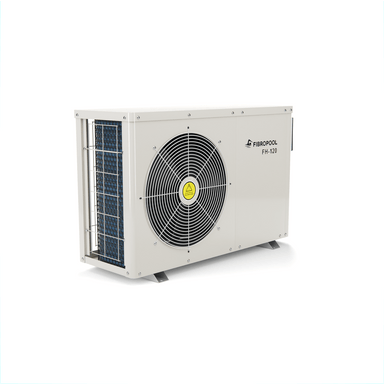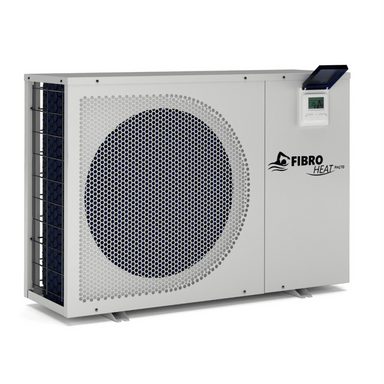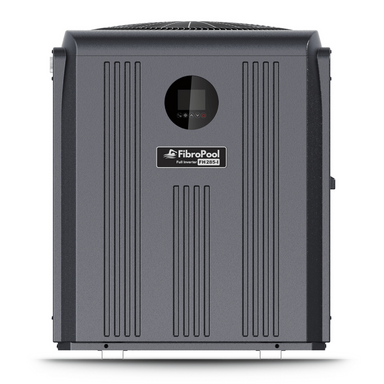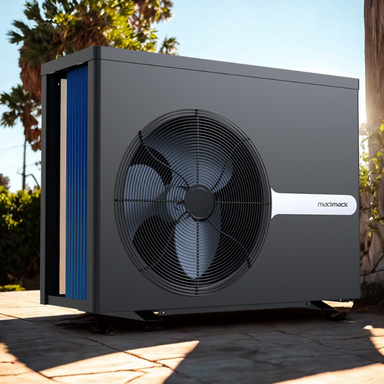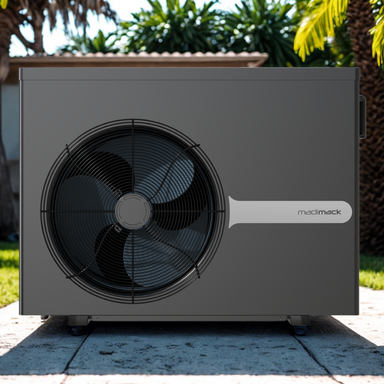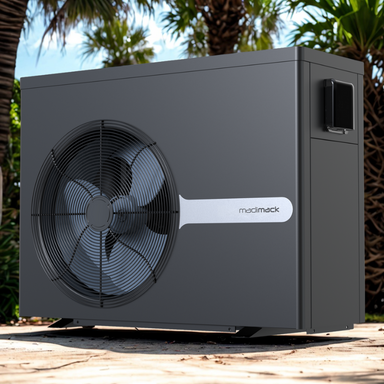

An electric swimming pool heat pump is the most cost-effective way to extend your swim season. Unlike gas heaters that burn fuel to generate heat, a heat pump pool heater moves existing heat from the surrounding air into your water - delivering 5 to 6 units of heat for every unit of electricity consumed. The result: lower monthly bills, a longer swimming season, and a pool that's comfortable when you want to use it.
Every pool heat pump on this page ships free. Models range from compact above ground pool heat pumps starting under $1,000 to large-pool inverter models that handle over 35,000 gallons. Use the pool heat pump sizing calculator and the product table below to find the right unit, then scroll down to browse.
Skip to productsUse this interactive pool heat pump calculator to estimate the BTUs you need based on your pool's dimensions and your climate. This is the same logic used in a standard pool heat pump sizing calculator - surface area, volume, desired temperature rise, and climate multiplier. Adjust the dropdowns to get your estimate instantly.
Estimates are OK! You don't need exact measurements - ballpark numbers work fine. The calculator rounds to the nearest unit size, and we always recommend sizing up slightly when you're between options.
| Cost | Heat Pump (electric) | Gas Heater (est.) |
|---|---|---|
| Heat-up cost |
||
| Annual running cost |
Based on avg US electricity rate of $0.1724/kWh (2026) and $1.50/therm for natural gas. Heat pump assumes COP of 4.5. Gas heater assumes 85% efficiency. Annual cost accounts for your climate's swim season and typical seasonal ambient temperatures - summer months when ambient air exceeds your target temp cost almost nothing to maintain. Heat-up assumes pool starts at 70 F. Actual costs vary by usage, wind exposure, and pool cover habits.
This calculator provides an estimate based on pool volume, climate, target temperature, and heating speed. Factors like wind exposure, direct sun, and pool cover use all affect real-world performance. When in doubt, size up - a slightly larger unit runs less frequently and lasts longer. Call us at 800-809-3741 for personalised sizing advice.
Every model below is active in our collection. Inverter models use variable-speed compressors - quieter, more efficient, and lower monthly cost. 110V models plug into any standard outdoor outlet, no dedicated circuit required. All other units need a dedicated 220-240V circuit.
| Pool Size | Unit | BTUs | Mode | Price |
|---|---|---|---|---|
| Up to 5,000 gal | FibroPool FH120 | 20,000 | Heat/Cool 110V | from $975 |
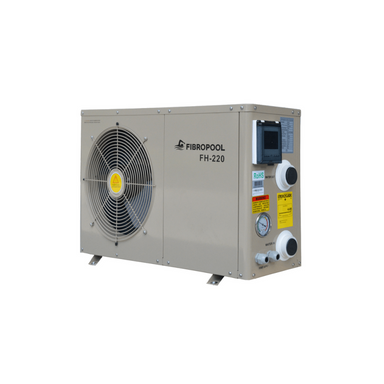
| FibroPool FH220 | 20,000 | Heat/Cool | $1,146 | |
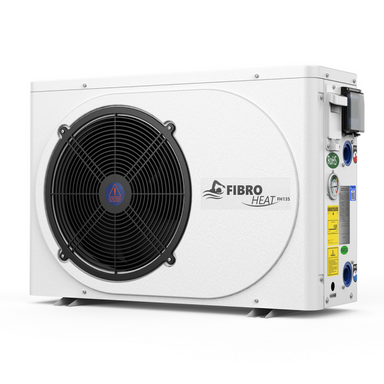
| Up to 7,500 gal | FibroPool FH135 | 35,000 | Heat/Cool 110V | from $956 |
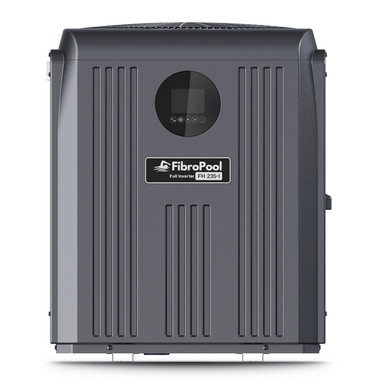
| FibroPool FH235-i | 35,000 | Heat/Cool Inverter | $1,470 | |
| Madimack InverECO 32K | 32,000 | Heat/Cool Inverter Spa | $2,110 | |
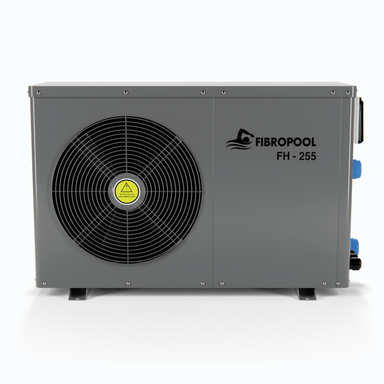
| Up to 10,000 gal | FibroPool FH255 | 55,000 | Heat/Cool | from $1,853 |
| Madimack InverECO 40K | 40,000 | Heat/Cool Inverter | $2,450 | |
| Up to 12,000 gal | Madimack InverECO 50K | 50,000 | Heat/Cool Inverter | $2,680 |
| Hayward HeatPro 50K | 50,000 | Heat/Cool Spa | $2,999 | |
| Up to 15,000 gal | FibroPool FH270 | 70,000 | Heat/Cool | from $1,935 |
| AquaCal T70 TropiCal | 63,000 | Heat/Cool Inverter Spa | $3,311 | |
| Madimack InverECO 66K | 66,000 | Heat/Cool Inverter Spa | $3,115 | |
| Up to 17,500 gal | FibroPool FH285-i | 85,000 | Heat/Cool Inverter | from $2,386 |
| Up to 20,000 gal | GulfStream HE110 RA | 115,000 | Heat Only Spa | $3,895 |
| GulfStream HE125 TA | 118,000 | Heat/Cool Spa | $4,695 | |
| Madimack InverTitan 90K | 90,000 | Heat/Cool Inverter Spa | $5,000 | |
| Madimack InverELITE 84K | 84,000 | Heat/Cool Inverter Spa | $6,230 | |
| Up to 23,000 gal | GulfStream HE125 RA | 125,000 | Heat Only Spa | $4,095 |
| Up to 25,000 gal | Hayward HeatPro 100K | 100,000 | Heat/Cool Spa | $5,499 |
| Hayward HeatPro 140K | 140,000 | Heat Only Spa | $6,999 | |
| AquaCal SQ140R | 114,000 | Heat/Cool Inverter Spa | $4,652 | |
| AquaCal SQ145 | 121,000 | Heat Only Spa | $5,435 | |
| AquaCal T100 TropiCal | 108,000 | Heat/Cool Inverter Spa | $4,770 | |
| Madimack InverTitan 112K | 112,000 | Heat/Cool Inverter Spa | $5,790 | |
| Up to 25,000 gal | Madimack InverELITE 116K | 116,000 | Heat/Cool Inverter Spa | $6,900 |
| Up to 27,000 gal | GulfStream HE150 RA | 142,000 | Heat Only Spa | $4,495 |
| Up to 30,000 gal | AquaCal T130 TropiCal | 123,000 | Heat/Cool Inverter Spa | $5,519 |
| GulfStream HE150 TA | 137,000 | Heat/Cool Spa | $5,095 | |
| Over 30,000 gal | AquaCal SQ160R | 128,000 | Heat/Cool Inverter Spa | $5,316 |
| AquaCal SQ200R | 138,000 | Heat/Cool Inverter Spa | $6,450 |
Heat/Cool units heat and chill. Heat Only units cost less if cooling isn't needed. Inverter models run quieter and use less electricity. 110V models need no dedicated circuit. Spa units are rated for pool and spa/hot tub use. Cold-climate buyers (Northeast, Midwest) should consider sizing up one tier.
Choosing between standard and inverter technology is the single biggest decision when shopping for a swimming pool heat pump. Here's the honest breakdown.
Standard compressors cycle fully on and fully off. They're proven, straightforward, and typically lower upfront cost. The non-inverter FibroPool FH-series and GulfStream RA models are all standard. The Hayward HeatPro 50K and 100K are also standard single-speed units. They're an excellent fit for seasonal or occasional use, or any buyer focused on upfront cost over long-term running costs. A large standard unit like the GulfStream HE150 RA at 142,000 BTUs delivers strong output at a competitive price for pools over 27,000 gallons.
An inverter pool heat pump uses a variable-speed compressor that modulates its output continuously to match what your pool actually needs. Instead of blasting full power and shutting off, it runs steadily at whatever level is required. The advantages: significantly quieter operation, 20-40% lower electricity costs over a full season, and a longer compressor lifespan. In warm climates with year-round use - Florida, Texas, Arizona - the energy savings typically recover the price premium within one to two seasons.
Every Madimack unit in this collection is a full inverter. AquaCal's TropiCal line and all SQ-R models are inverter. FibroPool's FH235-i and FH285-i are inverter; the remaining FibroPool models are standard. GulfStream RA models are standard; TA models are standard compressor with heat/cool capability. The Hayward HeatPro 140K uses a multi-speed ECM fan motor but a single-speed compressor - it is not a full inverter but offers quieter operation than basic standard units.
Pool heat pump cost varies significantly by unit type. Here's a realistic overview of both purchase price and estimated monthly operating cost:
| Unit Type | Purchase Price | Est. Monthly Running Cost* | Best For |
|---|---|---|---|
| 110V compact | $955 - $1,146 | $25 - $55 | Small above ground pools, no electrical upgrade needed |
| 240V standard compressor | $1,146 - $6,999 | $55 - $130 | Seasonal use, inground pools, cost-conscious buyers |
| Inverter (mid-range) | $1,470 - $5,790 | $35 - $95 | Frequent use, warm climates, best pool heat pumps for inground pools |
| Inverter (premium / large pool) | $4,652 - $6,900 | $55 - $140 | Large inground pools, year-round swimming, maximum efficiency |
*Estimates based on moderate climate, ~$0.14/kWh electricity rate, and typical seasonal use. Pool cover use can reduce running costs by up to 50%.
A standard pool heat pump installation involves four connections: water in, water out, electrical supply, and a condensate drain. Most licensed pool or HVAC contractors can complete the install in half a day. Key requirements to know before ordering:
Electrical: All units except the FH120 and FH135 require a dedicated 220-240V, 30-60A breaker. If you don't have one run already, budget $300-$800 for an electrician. Plumbing: The unit installs inline on your return line, downstream of your filter and before any chlorinator. Clearance: Most manufacturers require 24-36 inches of clearance on all sides for adequate airflow - less than that and efficiency drops.
We support every customer well beyond the sale. We help connect you with qualified local installers in your area, provide technical guidance as you get set up, and put you in direct contact with the manufacturer when needed. Whether you have a question before you buy or need help the day your unit arrives, we're available.
Learn About Our Installation Support ->Pool heat pump sizing is based on pool volume and your climate. A general rule: multiply your pool's gallons by 8.34, then divide by 24 to get the BTU/hr needed for a standard heat-up in moderate weather. For a 15,000 gallon pool in a moderate climate, that works out to roughly 70,000 BTU. In cooler climates like the Northeast or Midwest, size up one tier. Use the sizing calculator above for a precise estimate based on your specific pool and location.
A correctly sized pool heat pump typically raises water temperature by 1 to 2 degrees Fahrenheit per hour. For a pool starting at 60 F and targeting 82 F, expect 12 to 24 hours with a standard unit and the right BTU rating. Inverter models running continuously can be faster. A pool cover dramatically speeds this up by preventing heat loss overnight - it can cut heat-up time nearly in half.
Pool heat pumps extract heat from the surrounding air, so their efficiency drops as air temperature falls. Most units operate effectively down to 45-50 F air temperature. Below that, output decreases significantly. In cold climates, this means heat pumps work well from May through October but are not practical as a year-round solution without supplemental heating. For year-round swimming in cold climates, a cold-weather-rated inverter model like the Madimack InverTitan or InverELITE (rated to 14 F) is a better fit.
A standard pool heat pump runs its compressor at full power and cycles on and off. An inverter pool heat pump uses a variable-speed compressor that adjusts output continuously to match demand - running at lower power when the pool is close to temperature, higher power when it needs to catch up. Inverter models use 20 to 40% less electricity over a season, run significantly quieter, and typically last longer because the compressor experiences less wear from hard start/stop cycling. The tradeoff is a higher upfront price, usually $500 to $1,500 more than a comparable standard unit.
Running costs depend on pool size, target temperature, climate, and whether you use a pool cover. For a typical 15,000 gallon inground pool in a moderate climate, a standard heat pump costs roughly $80 to $130 per month during swim season. An inverter model for the same pool runs closer to $50 to $95 per month. Year-round in a warm climate like Florida, annual running costs typically range from $300 to $600 for an inverter unit. Gas heaters cost 3 to 5 times more to operate at current energy prices.
Yes, with some caveats. Most GulfStream, AquaCal, Hayward HeatPro, and Madimack models in this collection are rated for pool and spa use - look for the Spa tag in the table above. The FibroPool models are not included in that group, as they are designed specifically for pool use and their flow rate requirements may not align with standalone spa circulation systems.
The main practical consideration for spas is recovery speed. Heat pumps raise water temperature at 1 to 2 degrees F per hour, which works well for maintaining a spa that's already at temperature but is slow for heating a cold spa from scratch. If you want a spa that can go from cold to hot in under an hour on demand, a gas heater is a better fit for that specific use case. For pools with attached spas where both are kept at temperature together, a correctly sized heat pump handles both efficiently.
An electric swimming pool heat pump is the most cost-effective way to extend your swim season. Unlike gas heaters that burn fuel to generate heat, a heat pump pool heater moves existing heat from the surrounding air into your water - delivering 5 to 6 units of heat for every unit of electricity consumed. The result: lower monthly bills, a longer swimming season, and a pool that's comfortable when you want to use it.
Every pool heat pump on this page ships free. Models range from compact above ground pool heat pumps starting under $1,000 to large-pool inverter models that handle over 35,000 gallons. Use the pool heat pump sizing calculator and the product table below to find the right unit, then scroll down to browse.
Skip to productsUse this interactive pool heat pump calculator to estimate the BTUs you need based on your pool's dimensions and your climate. This is the same logic used in a standard pool heat pump sizing calculator - surface area, volume, desired temperature rise, and climate multiplier. Adjust the dropdowns to get your estimate instantly.
Estimates are OK! You don't need exact measurements - ballpark numbers work fine. The calculator rounds to the nearest unit size, and we always recommend sizing up slightly when you're between options.
| Cost | Heat Pump (electric) | Gas Heater (est.) |
|---|---|---|
| Heat-up cost |
||
| Annual running cost |
Based on avg US electricity rate of $0.1724/kWh (2026) and $1.50/therm for natural gas. Heat pump assumes COP of 4.5. Gas heater assumes 85% efficiency. Annual cost accounts for your climate's swim season and typical seasonal ambient temperatures - summer months when ambient air exceeds your target temp cost almost nothing to maintain. Heat-up assumes pool starts at 70 F. Actual costs vary by usage, wind exposure, and pool cover habits.
This calculator provides an estimate based on pool volume, climate, target temperature, and heating speed. Factors like wind exposure, direct sun, and pool cover use all affect real-world performance. When in doubt, size up - a slightly larger unit runs less frequently and lasts longer. Call us at 800-809-3741 for personalised sizing advice.
Every model below is active in our collection. Inverter models use variable-speed compressors - quieter, more efficient, and lower monthly cost. 110V models plug into any standard outdoor outlet, no dedicated circuit required. All other units need a dedicated 220-240V circuit.
| Pool Size | Unit | BTUs | Mode | Price |
|---|---|---|---|---|
| Up to 5,000 gal | FibroPool FH120 | 20,000 | Heat/Cool 110V | from $975 |
| FibroPool FH220 | 20,000 | Heat/Cool | $1,146 | |
| Up to 7,500 gal | FibroPool FH135 | 35,000 | Heat/Cool 110V | from $956 |
| FibroPool FH235-i | 35,000 | Heat/Cool Inverter | $1,470 | |
| Madimack InverECO 32K | 32,000 | Heat/Cool Inverter Spa | $2,110 | |
| Up to 10,000 gal | FibroPool FH255 | 55,000 | Heat/Cool | from $1,853 |
| Madimack InverECO 40K | 40,000 | Heat/Cool Inverter | $2,450 | |
| Up to 12,000 gal | Madimack InverECO 50K | 50,000 | Heat/Cool Inverter | $2,680 |
| Hayward HeatPro 50K | 50,000 | Heat/Cool Spa | $2,999 | |
| Up to 15,000 gal | FibroPool FH270 | 70,000 | Heat/Cool | from $1,935 |
| AquaCal T70 TropiCal | 63,000 | Heat/Cool Inverter Spa | $3,311 | |
| Madimack InverECO 66K | 66,000 | Heat/Cool Inverter Spa | $3,115 | |
| Up to 17,500 gal | FibroPool FH285-i | 85,000 | Heat/Cool Inverter | from $2,386 |
| Up to 20,000 gal | GulfStream HE110 RA | 115,000 | Heat Only Spa | $3,895 |
| GulfStream HE125 TA | 118,000 | Heat/Cool Spa | $4,695 | |
| Madimack InverTitan 90K | 90,000 | Heat/Cool Inverter Spa | $5,000 | |
| Madimack InverELITE 84K | 84,000 | Heat/Cool Inverter Spa | $6,230 | |
| Up to 23,000 gal | GulfStream HE125 RA | 125,000 | Heat Only Spa | $4,095 |
| Up to 25,000 gal | Hayward HeatPro 100K | 100,000 | Heat/Cool Spa | $5,499 |
| Hayward HeatPro 140K | 140,000 | Heat Only Spa | $6,999 | |
| AquaCal SQ140R | 114,000 | Heat/Cool Inverter Spa | $4,652 | |
| AquaCal SQ145 | 121,000 | Heat Only Spa | $5,435 | |
| AquaCal T100 TropiCal | 108,000 | Heat/Cool Inverter Spa | $4,770 | |
| Madimack InverTitan 112K | 112,000 | Heat/Cool Inverter Spa | $5,790 | |
| Up to 25,000 gal | Madimack InverELITE 116K | 116,000 | Heat/Cool Inverter Spa | $6,900 |
| Up to 27,000 gal | GulfStream HE150 RA | 142,000 | Heat Only Spa | $4,495 |
| Up to 30,000 gal | AquaCal T130 TropiCal | 123,000 | Heat/Cool Inverter Spa | $5,519 |
| GulfStream HE150 TA | 137,000 | Heat/Cool Spa | $5,095 | |
| Over 30,000 gal | AquaCal SQ160R | 128,000 | Heat/Cool Inverter Spa | $5,316 |
| AquaCal SQ200R | 138,000 | Heat/Cool Inverter Spa | $6,450 |
Heat/Cool units heat and chill. Heat Only units cost less if cooling isn't needed. Inverter models run quieter and use less electricity. 110V models need no dedicated circuit. Spa units are rated for pool and spa/hot tub use. Cold-climate buyers (Northeast, Midwest) should consider sizing up one tier.
Choosing between standard and inverter technology is the single biggest decision when shopping for a swimming pool heat pump. Here's the honest breakdown.
Standard compressors cycle fully on and fully off. They're proven, straightforward, and typically lower upfront cost. The non-inverter FibroPool FH-series and GulfStream RA models are all standard. The Hayward HeatPro 50K and 100K are also standard single-speed units. They're an excellent fit for seasonal or occasional use, or any buyer focused on upfront cost over long-term running costs. A large standard unit like the GulfStream HE150 RA at 142,000 BTUs delivers strong output at a competitive price for pools over 27,000 gallons.
An inverter pool heat pump uses a variable-speed compressor that modulates its output continuously to match what your pool actually needs. Instead of blasting full power and shutting off, it runs steadily at whatever level is required. The advantages: significantly quieter operation, 20-40% lower electricity costs over a full season, and a longer compressor lifespan. In warm climates with year-round use - Florida, Texas, Arizona - the energy savings typically recover the price premium within one to two seasons.
Every Madimack unit in this collection is a full inverter. AquaCal's TropiCal line and all SQ-R models are inverter. FibroPool's FH235-i and FH285-i are inverter; the remaining FibroPool models are standard. GulfStream RA models are standard; TA models are standard compressor with heat/cool capability. The Hayward HeatPro 140K uses a multi-speed ECM fan motor but a single-speed compressor - it is not a full inverter but offers quieter operation than basic standard units.
Pool heat pump cost varies significantly by unit type. Here's a realistic overview of both purchase price and estimated monthly operating cost:
| Unit Type | Purchase Price | Est. Monthly Running Cost* | Best For |
|---|---|---|---|
| 110V compact | $955 - $1,146 | $25 - $55 | Small above ground pools, no electrical upgrade needed |
| 240V standard compressor | $1,146 - $6,999 | $55 - $130 | Seasonal use, inground pools, cost-conscious buyers |
| Inverter (mid-range) | $1,470 - $5,790 | $35 - $95 | Frequent use, warm climates, best pool heat pumps for inground pools |
| Inverter (premium / large pool) | $4,652 - $6,900 | $55 - $140 | Large inground pools, year-round swimming, maximum efficiency |
*Estimates based on moderate climate, ~$0.14/kWh electricity rate, and typical seasonal use. Pool cover use can reduce running costs by up to 50%.
A standard pool heat pump installation involves four connections: water in, water out, electrical supply, and a condensate drain. Most licensed pool or HVAC contractors can complete the install in half a day. Key requirements to know before ordering:
Electrical: All units except the FH120 and FH135 require a dedicated 220-240V, 30-60A breaker. If you don't have one run already, budget $300-$800 for an electrician. Plumbing: The unit installs inline on your return line, downstream of your filter and before any chlorinator. Clearance: Most manufacturers require 24-36 inches of clearance on all sides for adequate airflow - less than that and efficiency drops.
We support every customer well beyond the sale. We help connect you with qualified local installers in your area, provide technical guidance as you get set up, and put you in direct contact with the manufacturer when needed. Whether you have a question before you buy or need help the day your unit arrives, we're available.
Learn About Our Installation Support ->Pool heat pump sizing is based on pool volume and your climate. A general rule: multiply your pool's gallons by 8.34, then divide by 24 to get the BTU/hr needed for a standard heat-up in moderate weather. For a 15,000 gallon pool in a moderate climate, that works out to roughly 70,000 BTU. In cooler climates like the Northeast or Midwest, size up one tier. Use the sizing calculator above for a precise estimate based on your specific pool and location.
A correctly sized pool heat pump typically raises water temperature by 1 to 2 degrees Fahrenheit per hour. For a pool starting at 60 F and targeting 82 F, expect 12 to 24 hours with a standard unit and the right BTU rating. Inverter models running continuously can be faster. A pool cover dramatically speeds this up by preventing heat loss overnight - it can cut heat-up time nearly in half.
Pool heat pumps extract heat from the surrounding air, so their efficiency drops as air temperature falls. Most units operate effectively down to 45-50 F air temperature. Below that, output decreases significantly. In cold climates, this means heat pumps work well from May through October but are not practical as a year-round solution without supplemental heating. For year-round swimming in cold climates, a cold-weather-rated inverter model like the Madimack InverTitan or InverELITE (rated to 14 F) is a better fit.
A standard pool heat pump runs its compressor at full power and cycles on and off. An inverter pool heat pump uses a variable-speed compressor that adjusts output continuously to match demand - running at lower power when the pool is close to temperature, higher power when it needs to catch up. Inverter models use 20 to 40% less electricity over a season, run significantly quieter, and typically last longer because the compressor experiences less wear from hard start/stop cycling. The tradeoff is a higher upfront price, usually $500 to $1,500 more than a comparable standard unit.
Running costs depend on pool size, target temperature, climate, and whether you use a pool cover. For a typical 15,000 gallon inground pool in a moderate climate, a standard heat pump costs roughly $80 to $130 per month during swim season. An inverter model for the same pool runs closer to $50 to $95 per month. Year-round in a warm climate like Florida, annual running costs typically range from $300 to $600 for an inverter unit. Gas heaters cost 3 to 5 times more to operate at current energy prices.
Yes, with some caveats. Most GulfStream, AquaCal, Hayward HeatPro, and Madimack models in this collection are rated for pool and spa use - look for the Spa tag in the table above. The FibroPool models are not included in that group, as they are designed specifically for pool use and their flow rate requirements may not align with standalone spa circulation systems.
The main practical consideration for spas is recovery speed. Heat pumps raise water temperature at 1 to 2 degrees F per hour, which works well for maintaining a spa that's already at temperature but is slow for heating a cold spa from scratch. If you want a spa that can go from cold to hot in under an hour on demand, a gas heater is a better fit for that specific use case. For pools with attached spas where both are kept at temperature together, a correctly sized heat pump handles both efficiently.
Save $-4,652.00
Save $-5,316.00
Save $-6,450.00
Save $1,206.00
Save $-5,519.00
Save $839.00
Sale
Sale
Save $-1,145.99
Save $-1,469.99
Sale
Sale
Sale
Save $-3,895.00
Save $-4,095.00
Save $-4,495.00
Save $-4,695.00
Save $-5,095.00
Save $-5,799.00
Save $-6,999.00
Save $-2,999.00
Save $225.00
Save $258.00
Save $276.00