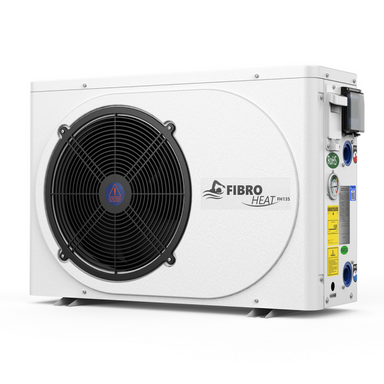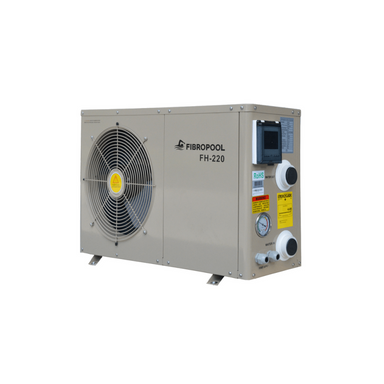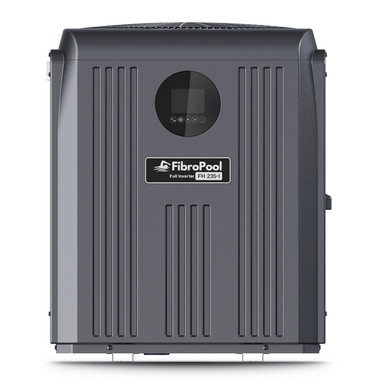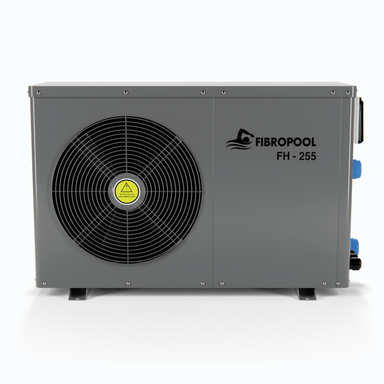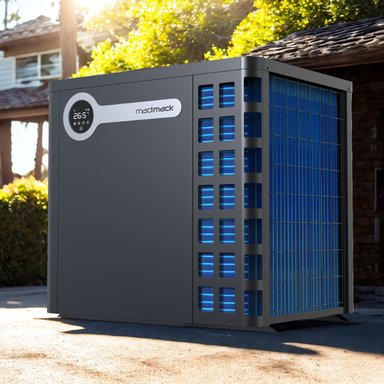

A pool heater-chiller does both: heat in spring and fall, cool in summer. Every unit on this page handles both modes as standard: no add-ons, no upgrade required. The main decisions are pool size, budget, and whether you want an inverter compressor for lower running costs and quieter operation.
Pool size ranges assume a moderate US climate (Florida, Texas, Southwest). Cold-climate buyers (New York, Northeast, Midwest) should size up one tier. Prices shown are current sale prices where applicable.
Standard single-speed compressors cycle on at full power and off - reliable, simple, lower upfront cost. Inverter compressors modulate continuously to match demand: quieter, more efficient at partial load, and meaningfully lower monthly running costs. For pools used frequently or in warm climates where the pump runs most of the year - Florida, Texas, Arizona - an inverter pays back the price premium within one to two seasons.
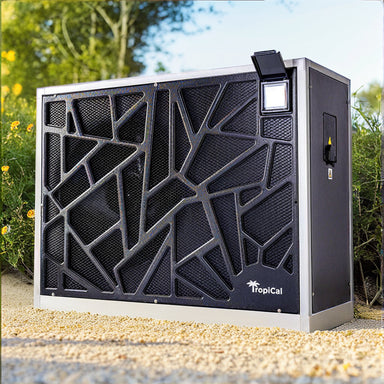
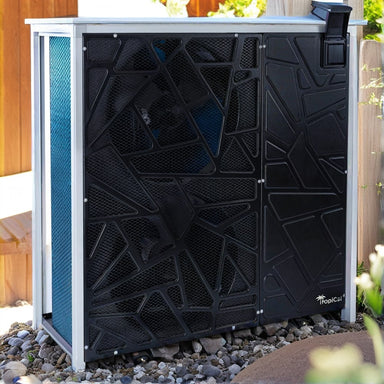
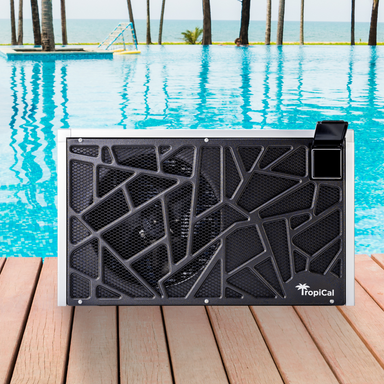
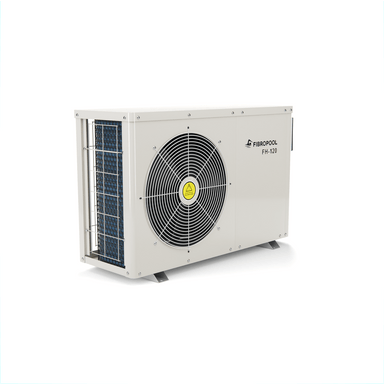
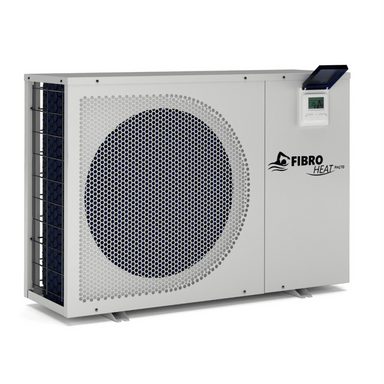
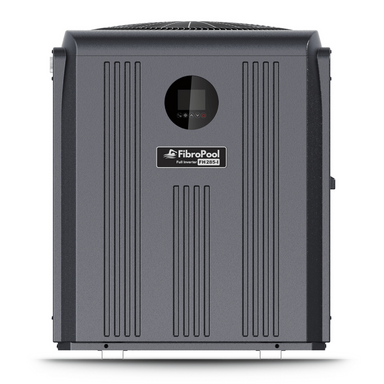
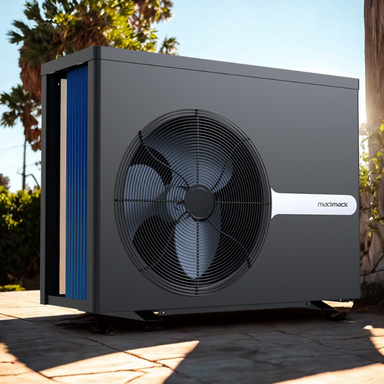
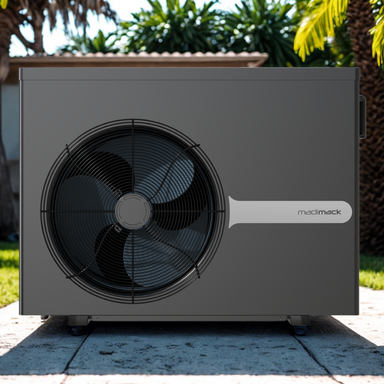
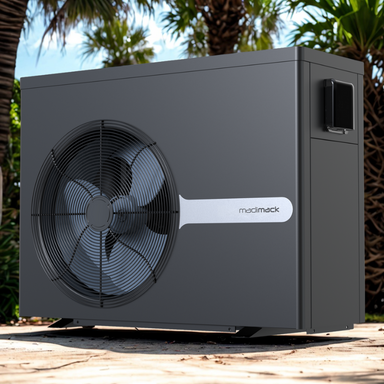
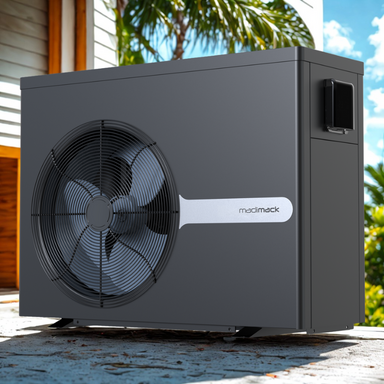
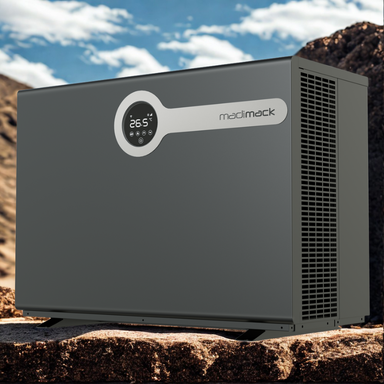
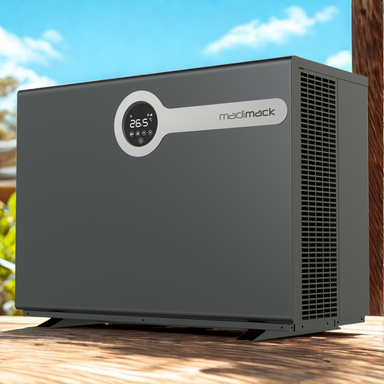
Every Madimack unit is a full inverter. FibroPool offers both (FH235-i and FH285-i are inverter; others are standard). AquaCal's TropiCal line is inverter; the SQ-R line is standard. GulfStream TA units are standard.
The FibroPool FH120 and FH135 run on standard 110/120V - plug into any outdoor outlet, no electrician needed. Every other unit on this page requires a dedicated 220-240V circuit. If you don't have that run already, budget $300-$800 for an electrician before ordering.
A pool in direct sun can reach 90°F+ in summer in Florida, Texas, Arizona, and New York - too warm to swim in and hard on pool chemistry. A heater chiller combo lets you hold a target temperature year-round. Buying a pool heater and chiller combo upfront is cheaper than replacing a heat-only unit later, and most units here are priced comparably to their heat-only equivalents at the same BTU output.
A pool heater chiller is a single unit that can both heat and cool your pool water. In heating mode it extracts warmth from the air and transfers it to your pool. In cooling mode it removes heat from the water and releases it into the air. One unit handles year-round temperature control. Every product on this page is a heat/cool unit - if you only need heating, you can use it in heat mode only and ignore the cooling function.
Match the BTU rating to your pool volume. For pools up to 10,000 gallons, the FibroPool FH235-i (35K BTU) or Madimack InverECO 40K are solid choices. For 15,000 to 20,000 gallon pools, the GulfStream HE125 TA (118K BTU) or Madimack InverTitan 90K cover that range well. For larger inground pools up to 30,000 gallons, the AquaCal T130 TropiCal (123K BTU) or GulfStream HE150 TA (137K BTU) are the right tier. In cool climates, size up one tier from whatever the table suggests.
Yes - that is exactly what these units are designed to do. In spring and fall you run it in heat mode to maintain a comfortable temperature. In summer when water gets too warm, you switch to cool mode at the unit's control panel or via a connected app on inverter models. The only limit is that heat pumps lose efficiency below about 50 degrees F air temperature, so in very cold climates winter heating may still require supplemental heat or closing the pool for the season.
Not in heating mode - the electricity consumption in heat mode is identical whether the unit has cooling capability or not. Cooling mode typically costs $30 to $70 per month for an active summer month on a standard inground pool. The main cost difference is upfront: heat/cool units cost $300 to $800 more than comparable heat-only models. In warm climates where you will actually use the cooling function, that premium pays back quickly in comfort and avoided chemical costs from overheated water.
Most pool heater chiller units can cool water to a practical lower limit of about 60 to 65 degrees F. For most swimmers the target is simply keeping water below 85 degrees F on hot summer days, which these units handle easily. If you need precise low temperatures for competitive swim training or cold plunge use, call us at 800-809-3741 - some units are better suited for sustained low-temperature operation than others.
A pool heater-chiller does both: heat in spring and fall, cool in summer. Every unit on this page handles both modes as standard: no add-ons, no upgrade required. The main decisions are pool size, budget, and whether you want an inverter compressor for lower running costs and quieter operation.
Pool size ranges assume a moderate US climate (Florida, Texas, Southwest). Cold-climate buyers (New York, Northeast, Midwest) should size up one tier. Prices shown are current sale prices where applicable.
Standard single-speed compressors cycle on at full power and off - reliable, simple, lower upfront cost. Inverter compressors modulate continuously to match demand: quieter, more efficient at partial load, and meaningfully lower monthly running costs. For pools used frequently or in warm climates where the pump runs most of the year - Florida, Texas, Arizona - an inverter pays back the price premium within one to two seasons.
Every Madimack unit is a full inverter. FibroPool offers both (FH235-i and FH285-i are inverter; others are standard). AquaCal's TropiCal line is inverter; the SQ-R line is standard. GulfStream TA units are standard.
The FibroPool FH120 and FH135 run on standard 110/120V - plug into any outdoor outlet, no electrician needed. Every other unit on this page requires a dedicated 220-240V circuit. If you don't have that run already, budget $300-$800 for an electrician before ordering.
A pool in direct sun can reach 90°F+ in summer in Florida, Texas, Arizona, and New York - too warm to swim in and hard on pool chemistry. A heater chiller combo lets you hold a target temperature year-round. Buying a pool heater and chiller combo upfront is cheaper than replacing a heat-only unit later, and most units here are priced comparably to their heat-only equivalents at the same BTU output.
A pool heater chiller is a single unit that can both heat and cool your pool water. In heating mode it extracts warmth from the air and transfers it to your pool. In cooling mode it removes heat from the water and releases it into the air. One unit handles year-round temperature control. Every product on this page is a heat/cool unit - if you only need heating, you can use it in heat mode only and ignore the cooling function.
Match the BTU rating to your pool volume. For pools up to 10,000 gallons, the FibroPool FH235-i (35K BTU) or Madimack InverECO 40K are solid choices. For 15,000 to 20,000 gallon pools, the GulfStream HE125 TA (118K BTU) or Madimack InverTitan 90K cover that range well. For larger inground pools up to 30,000 gallons, the AquaCal T130 TropiCal (123K BTU) or GulfStream HE150 TA (137K BTU) are the right tier. In cool climates, size up one tier from whatever the table suggests.
Yes - that is exactly what these units are designed to do. In spring and fall you run it in heat mode to maintain a comfortable temperature. In summer when water gets too warm, you switch to cool mode at the unit's control panel or via a connected app on inverter models. The only limit is that heat pumps lose efficiency below about 50 degrees F air temperature, so in very cold climates winter heating may still require supplemental heat or closing the pool for the season.
Not in heating mode - the electricity consumption in heat mode is identical whether the unit has cooling capability or not. Cooling mode typically costs $30 to $70 per month for an active summer month on a standard inground pool. The main cost difference is upfront: heat/cool units cost $300 to $800 more than comparable heat-only models. In warm climates where you will actually use the cooling function, that premium pays back quickly in comfort and avoided chemical costs from overheated water.
Most pool heater chiller units can cool water to a practical lower limit of about 60 to 65 degrees F. For most swimmers the target is simply keeping water below 85 degrees F on hot summer days, which these units handle easily. If you need precise low temperatures for competitive swim training or cold plunge use, call us at 800-809-3741 - some units are better suited for sustained low-temperature operation than others.
Save $-4,652.00
Save $-5,316.00
Save $-6,450.00
Save $1,206.00
Save $-5,519.00
Save $839.00
Sale
Sale
Save $-1,145.99
Save $-1,469.99
Sale
Sale
Sale
Save $-4,695.00
Save $-5,095.00
Save $-5,799.00
Save $225.00
Save $258.00
Save $276.00
Save $329.00
Save $730.00
Save $659.00
Save $610.00
Save $532.00